Healthy Eating for Kids: A Practical Guide for Parents
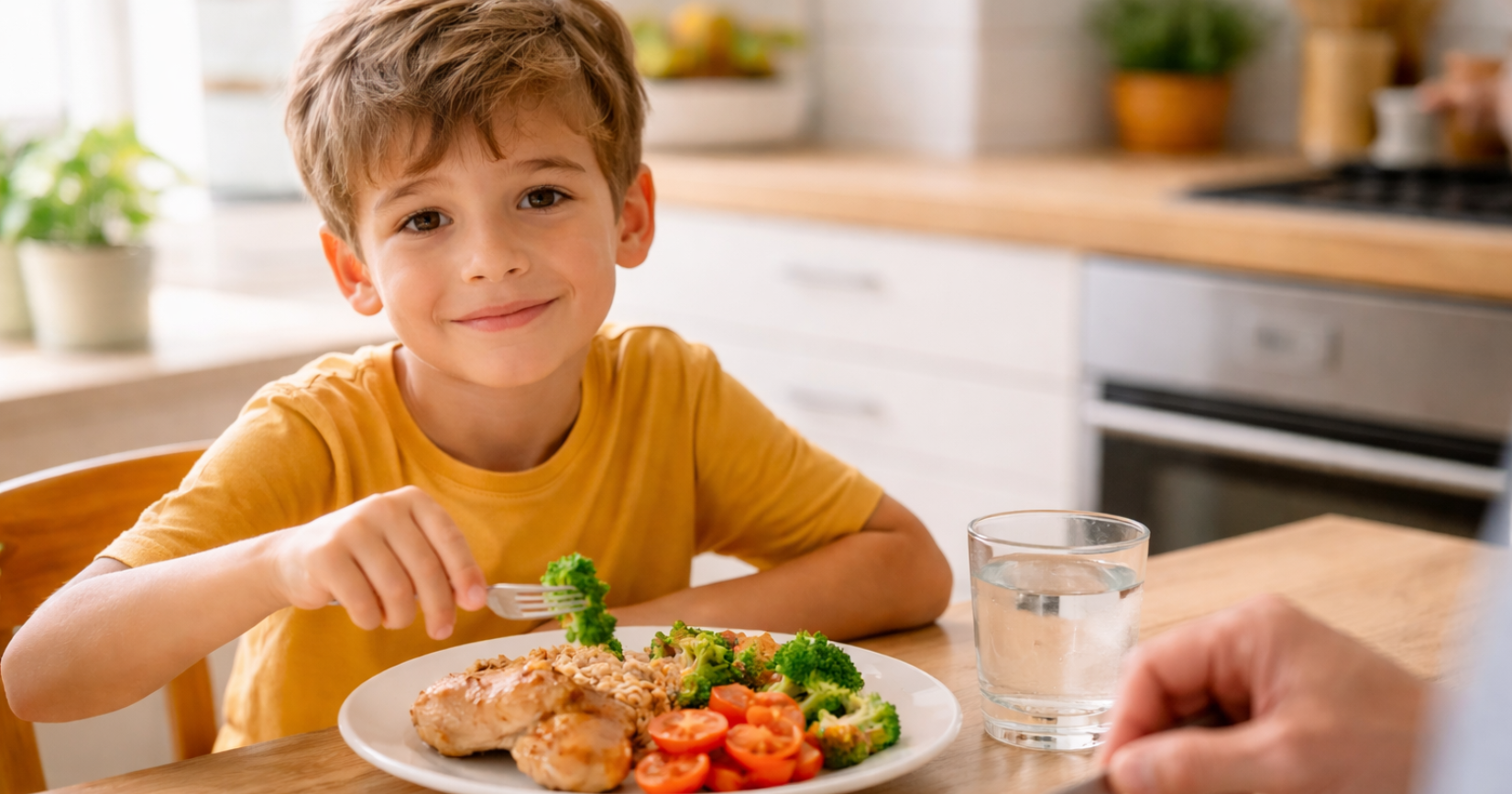
You do not need to be a nutritionist to feed your child well. You need a few clear principles, some consistency, and the willingness to keep offering good food even when it gets rejected for the fifth time in a row.
At home, you shape your children’s eating habits almost entirely. What you stock in the kitchen, put on the table, and how you talk about food will influence your child’s eating habits for years to come.
This post covers what children actually need, how to build positive habits without turning meals into battles, and where the most common mistakes happen.
What Children Need at Each Stage
Nutritional needs change as children grow. Here is a straightforward breakdown based on NHS and British Nutrition Foundation guidance.
Babies (0 to 12 months)
Breastfeeding is recommended as the sole source of nutrition for the first six months of life. The World Health Organization (WHO) and the NHS both advise exclusive breastfeeding for up to 6 months, with continued breastfeeding alongside solid foods for up to 2 years and beyond.
Breast milk provides the right balance of nutrients, antibodies, and calories for a baby’s development. It also reduces the risk of infections, allergies, and childhood obesity.
If breastfeeding is not possible, infant formula is a safe alternative. What matters most is that the baby is fed, growing, and healthy. No parent should feel guilt about how they get there.
Weaning begins at around six months. Start with single vegetables and fruits (pureed or soft), then gradually introduce a wider variety of foods including soft-cooked meat, fish, eggs, and starchy foods. The NHS recommends introducing common allergens (such as peanuts, eggs, and wheat) one at a time from around six months, as early introduction can reduce the risk of allergies developing later.
Toddlers (1 to 4 Years)
By 12 months, your child should be eating a varied diet from all food groups:
- Starchy carbohydrates at each meal (bread, rice, pasta, potatoes, oats).
- Fruit and vegetables at every meal and as snacks. Aim for five portions a day. A child’s portion is roughly the size of their palm.
- Protein two to three times a day (meat, fish, eggs, beans, lentils, tofu).
- Dairy or alternatives three times a day (milk, cheese, yoghurt) for calcium.
- Small amounts of healthy fats (oily fish, avocado, nut butters, olive oil).
Children aged one to four should take a daily supplement containing vitamins A, C, and D. This is NHS guidance, not optional advice. The UK government provides free vitamin drops through the Healthy Start scheme for eligible families.
School-Age Children (5 to 12)
The same food groups apply. Portions increase gradually with age and activity level.
Key priorities at this stage:
- Breakfast matters. Research published in Frontiers in Human Neuroscience (2013) found that children who eat breakfast perform better on memory and attention tasks throughout the morning. A bowl of porridge, whole-grain toast with peanut butter, or eggs on toast are all solid options. Sugary cereals are not.
- Hydration. Children should drink six to eight glasses of water or milk per day. The British Nutrition Foundation advises water and plain milk as the best choices. Fruit juice should be limited to 150ml per day and served with meals to reduce the impact on teeth.
- Iron. Iron deficiency is one of the most common nutritional problems in UK children. Good sources include red meat, beans, lentils, dark green vegetables, and fortified cereals. Vitamin C helps the body absorb iron, so pairing iron-rich foods with fruit or vegetables at the same meal makes a practical difference.
Teenagers (13+)
Teenagers need more calories than younger children due to growth spurts and higher activity levels. Boys aged 11 to 14 need roughly 2,200 calories per day. Girls the same age need roughly 1,845. These figures come from the British Nutrition Foundation and vary depending on activity level.
The biggest nutritional risks for teenagers are skipping meals (especially breakfast), replacing real food with snacks and energy drinks, and under-consuming calcium and iron during a period when their bodies need both.
If your teenager is starting to make more of their own food choices, your role shifts from controlling what they eat to making sure the right options are available at home. Stocking the fridge and cupboards with good food ensures a baseline even when teenagers make their own choices.
For more on staying connected with teenagers as they push for independence, this post on parenting teenage boys covers the broader approach of supporting without controlling.
How to Build Good Eating Habits
The habits matter more than any single meal. A child who eats well 80% of the time and has treats the other 20% is doing fine.
Eat Together
Family meals, even three or four times a week, are one of the strongest predictors of healthy eating in children. A 2018 review in JAMA Network Open found that children who regularly ate family meals had better diet quality and lower rates of obesity compared to those who did not.
You do not need elaborate meals. The point is sitting down together, eating the same food, and making the table a low-stress environment.
Offer, Do Not Force
It takes an average of 10 to 15 exposures to a new food before a child will accept it. That figure comes from research on children’s food neophobia published in Appetite journal. Ten to fifteen times of seeing, touching, or tasting a small amount.
That means rejection on the first, second, or even eighth attempt is normal. Keep offering the food without pressure, without bribes, and without making it a battle. Put it on the plate alongside foods they do eat. Let them ignore it if they choose. Eventually, most children come around.
Let Them Help
Children who are involved in food preparation are more likely to eat what they helped make. Even small tasks count. Washing vegetables, stirring a pot, setting the table, choosing between two meal options.
This builds familiarity with real food and teaches basic skills they will need later.
Avoid Using Food as a Reward or Punishment
“Eat your vegetables and you can have dessert” teaches a child that vegetables are the obstacle and sugar is the prize. It also gives sweets a higher emotional status than they deserve.
Treat all food neutrally. Dessert is just another part of the meal, not a reward for enduring the rest of it.
Reducing Sugar Without Creating Obsession
Children in the UK consume roughly three times the recommended daily limit of free sugars, according to the National Diet and Nutrition Survey. Free sugars include any sugar added to food and drinks, plus sugars found in honey, syrups, fruit juice, and smoothies.
Practical ways to reduce sugar:
- Switch sugary cereals for porridge, Weetabix, or Shredded Wheat. Check the label: anything above 12.5g of sugar per 100g is classified as high sugar.
- Replace fizzy drinks and squash with water. If your child resists plain water, add a slice of lemon or cucumber.
- Limit fruit juice to 150ml per day, diluted if possible, and only with meals.
- Swap biscuits and crisps for fruit, rice cakes, vegetable sticks with hummus, or cheese and crackers.
- Read labels. Sugar appears under many names: glucose, fructose, sucrose, maltose, dextrose, syrup, molasses, and honey are all sugar.
The goal is not to eliminate sugar. It is to reduce the baseline so that treats remain treats rather than becoming daily staples.
What about fussy eaters?
Almost all children go through a phase of selective eating. It is developmentally normal, particularly between the ages of two and five.
What helps:
- Keep mealtimes calm and pressure-free. Anxiety around food makes fussiness worse.
- Serve at least one food you know they will eat alongside the new or disliked food.
- Model eating the food yourself without commenting on it.
- Let them serve themselves from shared plates where possible. A sense of control reduces resistance.
- Do not prepare separate meals. Offering an alternative every time a child rejects food teaches them that rejection leads to a preferred option.
When to seek help: If your child’s diet is extremely limited (fewer than 10 to 15 foods), if they are losing weight, or if mealtimes consistently cause significant distress, speak to your GP. A referral to a paediatric dietitian may be appropriate. The NHS provides this service free of charge.
Free Resources Worth Knowing About
- NHS Start4Life (nhs.uk/start4life): Practical advice on breastfeeding, weaning, and toddler nutrition.
- British Nutrition Foundation (nutrition.org.uk): Evidence-based guides on children’s nutrition by age group.
- NHS Change4Life (nhs.uk/change4life): Free recipes, food swaps, and activity ideas for families.
- Healthy Start Scheme (healthystart.nhs.uk): Free vouchers for milk, fruit, vegetables, and vitamins for eligible families with children under four.
The Bottom Line
Healthy eating for children is not about perfection. It is about making good food the easy, available, normal option in your home.
Pick one thing from this post and start it this week. Stock the fruit bowl. Sit down for one more family meal. Swap one sugary snack for something better. Small, consistent changes build habits that last far longer than any diet plan.

You may also like
-

How to Handle an Angry Child (Without Making It Worse)
2 April, 2026