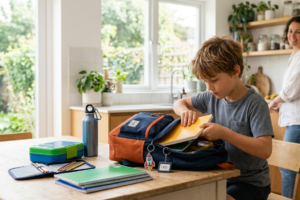
How to Build Healthy Habits in Your Kids
Your children will not develop healthy habits because you told them to. They will develop them because they saw you doing it, because it was part of normal life at home, and because no one made it feel like punishment.
That is the good news. You do not need a plan that looks like a school curriculum. You need a few consistent choices built into your daily routine.
Start With What They See
Children copy behaviour before they follow instructions. If you reach for water instead of fizzy drinks, they notice. If you go for a walk after dinner instead of sitting on the sofa, they notice. If you eat vegetables without making a performance of it, they notice.
You do not need to narrate your healthy choices. Just make them visible.
This works in reverse too. If you skip meals, eat standing up over the kitchen counter, or treat exercise as something you dread, your children absorb that as normal. The habits you model at home will outlast anything they learn in a classroom.
Stop Framing Health as Restriction
The fastest way to make a child resist healthy eating is to make it about what they cannot have.
“No sweets.” “No more screen time.” “You can’t have that.”
Children hear restriction as punishment. It builds resentment and makes the restricted thing more desirable.
Flip the framing:
- Instead of “No biscuits before dinner,” try “Dinner’s nearly ready, pick which vegetable you want on your plate tonight.”
- Instead of “Stop sitting around,” try “Come help me in the garden for ten minutes.”
- Instead of “That’s enough screen time,” try “Your time’s up, what do you want to do outside?”
The shift is small but the difference in how children respond is significant. You are giving them a choice rather than taking something away.
Make Movement Part of Family Life
Structured exercise matters, but it is not the only way to keep children active. What matters more is that movement is a normal part of how your family spends time together.
Things that work:
- Walking to the shops instead of driving when the weather allows it.
- A family bike ride on a Saturday morning.
- Gardening together. Children who grow food are more likely to eat it.
- A ten-minute kickabout in the garden after school.
- Dancing in the kitchen while cooking. It sounds silly. Children love it.
The goal is not intensity. It is regularity. A child who moves a little every day is building a habit that will serve them for decades.
Find What They Actually Enjoy
Not every child wants to play football. Not every child wants to swim. Forcing a child into an activity they dislike teaches them that exercise is something to endure, not enjoy.
Pay attention to what your child gravitates toward naturally. Some children love team sports. Some prefer solo activities like cycling, climbing, or martial arts. Some are happiest when movement is disguised as play, like obstacle courses in the garden or building dens in the woods.
Let them try different things. When something sticks, support it. When something does not, let it go without guilt.
Use Screens Wisely, Not Fearfully
Screen time is not the enemy. Unmanaged screen time is.
A child watching a nature documentary or playing a problem-solving game is not doing the same thing as a child scrolling short-form video for three hours. Context matters more than minutes.
Practical screen rules that work in most families:
- No screens during meals.
- No screens in the bedroom after a set time.
- For every hour of screen time, match it with an equal amount of active time. This does not need to be enforced rigidly, but it sets a useful baseline.
- Sit with your child occasionally and watch what they watch. It opens conversations and gives you a better understanding of their digital world.
If screen time boundaries are a regular source of conflict, it is worth looking at the broader picture. Children who have enough physical activity, social time, and attention from parents tend to self-regulate screens better than children who are bored or under-stimulated.
Cook Together
One of the most effective ways to teach children about food is to involve them in making it.
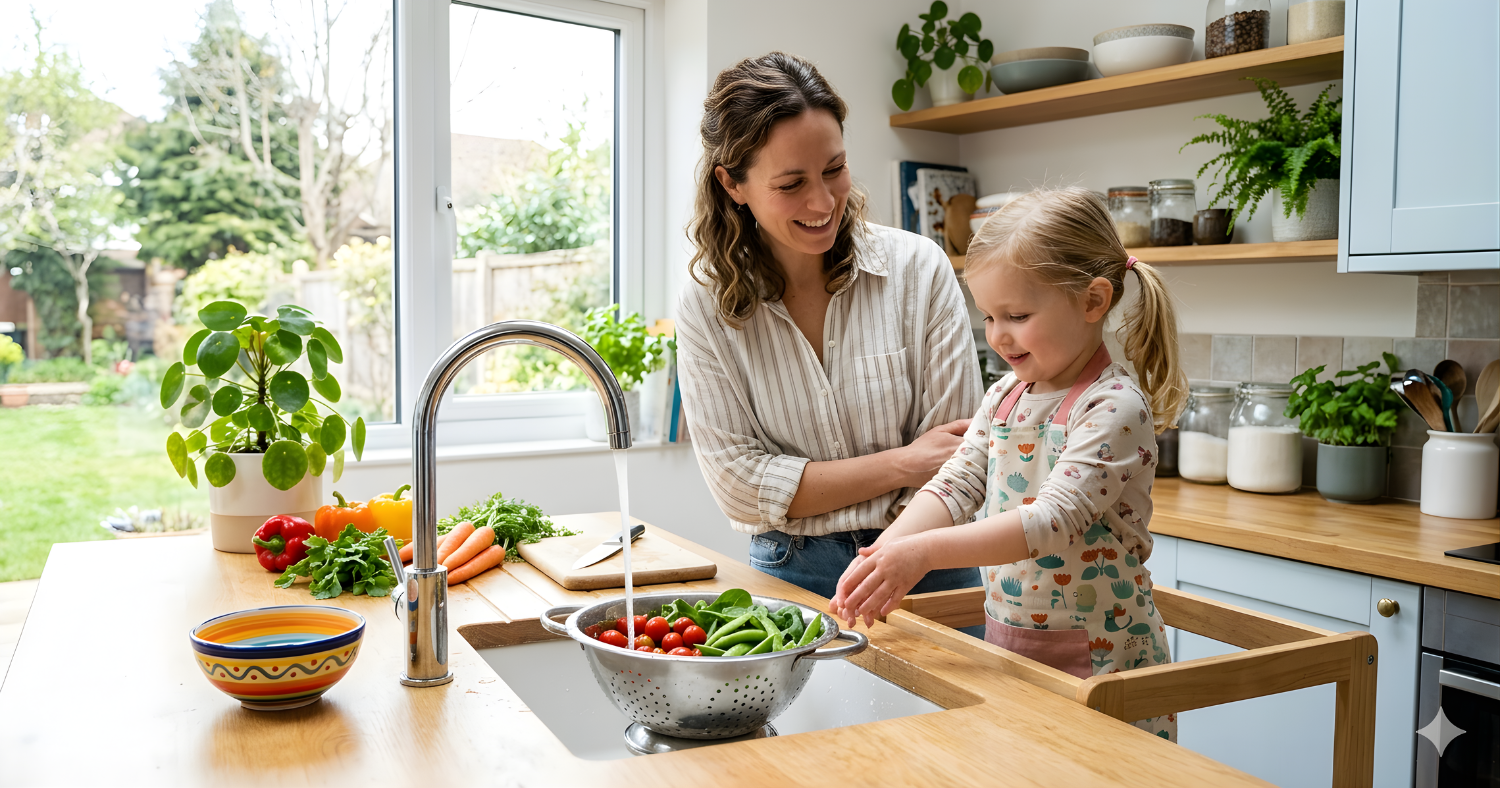
A five-year-old can wash vegetables and stir ingredients. A ten-year-old can follow a simple recipe. A teenager can cook a full meal with supervision.
When children help prepare food, two things happen. They are more willing to eat what they helped make. And they learn, without being taught, what goes into a meal, what real food looks like, and how long it takes to prepare.
Start small:
- Let them choose one meal a week from a list of options you are happy with.
- Give them one job during meal prep, even if it slows you down.
- Read food labels together at the supermarket. Make it a quick game: “Can you find one with less than 5g of sugar?”
Family meals, eaten at a table with no screens, are one of the strongest predictors of healthy eating habits in children. You do not need to manage this every night. Three or four times a week is enough to build the pattern.
Set Small Goals, Not Big Rules
A household rule like “We are all eating healthily from now on” will last about three days.
Small, specific goals work better:
- “This week, we are all going to try one new vegetable.”
- “This month, we are walking to school on Tuesdays and Thursdays.”
- “This weekend, everyone picks an outdoor activity they want to do.”
Small wins build momentum. Children who see themselves succeeding at small goals develop the confidence to take on bigger ones. That principle applies well beyond food and exercise. This post on building confidence in teenage boys covers how the same approach works for older children navigating social pressure and independence.
Reward With Experiences, Not Food
Using sweets or treats as a reward teaches children that unhealthy food is a prize. It creates an emotional association that is hard to undo later.
Better alternatives:
- A trip to the park, zoo, or swimming pool.
- Extra time doing something they love.
- A new book, art supplies, or a small kit related to their interests.
- Choosing the family activity for the weekend.
- One-on-one time with a parent, doing something they pick.
The best reward for most children is your undivided attention. It costs nothing and it reinforces the relationship alongside the habit.
Stay Involved Without Hovering
Know what your child eats at school. Know what physical activity they get during the day. Know what they are doing on their devices.
This does not mean micromanaging every choice. It means staying close enough to notice when something shifts. A child who suddenly stops wanting to eat, or who drops an activity they used to enjoy, or who becomes unusually sedentary, may be dealing with something that has nothing to do with food or fitness.
Stay curious. Ask questions. Keep the conversation open.
The Bottom Line
Healthy habits are not built through lectures, meal plans pinned to the fridge, or one-off family fitness challenges. They are built through what happens every day in your home without anyone making a big deal of it.
Pick one thing from this post and start it this week. One small change, done consistently, will do more for your child’s long-term health than any grand plan that falls apart by Wednesday.

You may also like
-
How to Handle an Angry Child (Without Making It Worse)
2 April, 2026 -
Healthy Eating for Kids: A Practical Guide for Parents
2 April, 2026